Open for Business, Open for Life: The Family Shops That Wrote Hyde Park's Real Story
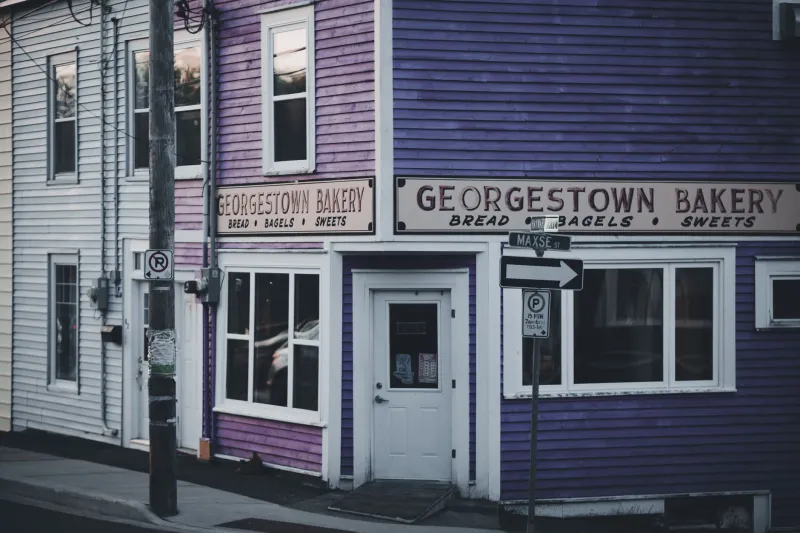
There's a particular kind of quiet that settles over a shuttered storefront. The painted-over windows, the handwritten "Thank You for 40 Years" sign taped to the inside of the glass — it hits different than an empty office building or a vacant lot. It feels personal. Because in Hyde Park, for a lot of people, it was personal.
The corner stores, delis, and neighborhood institutions that anchored this community for generations weren't just retail spaces. They were the places where Hyde Park told itself its own story, one transaction, one conversation, one cup of coffee at a time.
"He Knew What You Wanted Before You Said It"
Ask anyone who grew up in Hyde Park about their neighborhood store, and you'll get a version of the same answer. It usually starts with a name — Mr. So-and-So behind the counter — and ends with something like, *"He just knew."
That kind of knowing doesn't come from a loyalty app or a customer profile. It comes from decades of showing up. From watching kids grow into parents and parents grow into grandparents. From remembering that the Kowalski family always grabbed extra rye bread on Fridays, or that Mrs. Patterson needed her cigarettes and her gossip in equal measure every Saturday morning.
Rosalie Gutierrez, whose family ran a small grocery and deli on the south end of the neighborhood for nearly thirty-five years, puts it plainly: "We weren't just selling food. We were keeping track of people. If someone didn't come in for a week, we noticed. We'd ask around. That's not something a chain store does."
Her mother opened the shop in the early 1980s with a secondhand deli slicer and what Rosalie describes as "absolutely no business plan, just a lot of nerve." By the time Rosalie took over in the early 2000s, the store had become something far bigger than its square footage suggested. It was a de facto community bulletin board, a place where neighbors left notes for each other, where a lost dog flyer was guaranteed to be seen, and where the counter conversation could range from local school board politics to someone's cousin's wedding in a single breath.
The Counter as Community Table
What made these shops irreplaceable wasn't the inventory — it was the architecture of daily life they supported. Regulars didn't just stop in; they lingered. And in that lingering, something happened that urban planners and community organizers spend a lot of money trying to manufacture: genuine human connection.
Dennis Parrish, a Hyde Park native in his late sixties who still lives two blocks from where he grew up, remembers a hardware store on the main drag that his father visited every Saturday morning without fail. "He didn't always need anything," Dennis laughs. "Half the time he'd come home with a single pack of sandpaper or some WD-40 he didn't need. But he'd been in there for an hour. Talked to whoever was around. That was the point."
Those Saturday morning rituals weren't unique to his family. They were a pattern repeated across the neighborhood in butcher shops, bakeries, newsstands, and corner markets. The purchase was almost incidental. The real transaction was social.
That's what urban historians sometimes call the "third place" — not home, not work, but the informal gathering spot that holds a community together. Hyde Park's family businesses were third places long before anyone had a name for the concept.
What the Shelves Remembered
Family-owned shops also had a way of absorbing the neighborhood's history into their walls. Old photographs behind the counter. A sports pennant from a championship year. A framed newspaper clipping about a flood or a fire or a parade. These weren't decorations so much as documents — a visual archive of the community's memory.
Connie Yee, whose parents ran a small variety store for over two decades, saved nearly every piece of ephemera that accumulated in the shop over the years. "We have birthday cards customers gave us, photos from the block party in 1994, a drawing some kid made of my mom when he was in second grade," she says. "Where else does that stuff go? It would have been thrown away."
She's right. When a chain store closes, the shelves get stripped and the building gets reassigned. When a family shop closes, a piece of the neighborhood's autobiography disappears with it.
The Pressure Nobody Talks About
Of course, nostalgia can only carry a business so far. The forces working against small, family-owned retail in neighborhoods like Hyde Park are real and relentless. Rising commercial rents, supply chain costs that favor large-volume buyers, and the gravitational pull of online shopping have made survival genuinely difficult.
Rosalie Gutierrez closed her family's store three years ago, a decision she describes as "the hardest thing I've ever done that was also completely necessary." The math had simply stopped working. "The neighborhood changed. Not in a bad way, necessarily, but the new residents shopped differently. More online, more big-box. We couldn't compete with that."
For Dennis Parrish, the hardware store of his childhood closed in the late 1990s, replaced by a nail salon that has itself since turned over twice. "I don't blame anyone," he says. "But something went with it. Something you can't really explain to someone who didn't grow up with it."
What Survives, and Why It Matters
Not every family business in Hyde Park has closed its doors. A handful of stubborn, beloved institutions have managed to hang on — some through sheer force of personality, others by adapting smartly, and a few simply because the community showed up for them when it counted.
The ones that remain have become something almost totemic. They carry extra weight now, representing not just their own histories but the memory of everything that's been lost around them.
Connie Yee thinks about what her parents' store meant to the people who came through it, and she lands on a word that surprises her a little: witness. "They witnessed people's lives. The good stuff and the hard stuff. A store like that sees everything — divorces, job losses, new babies, funerals. It's all there in the daily rhythm of who comes in and what they need."
That's the thing about Hyde Park's family businesses that no square-footage analysis or economic impact report can fully capture. They weren't just part of the neighborhood's story. In many ways, they were the story — the place where it got told, retold, and remembered.
And every time one closes for good, a chapter ends. Not with a bang, but with a handwritten sign on a glass door, and a quiet that settles in like it's been waiting.