Before the Stories Disappear: Hyde Park Residents Are Racing to Catch the Voices That History Left Behind
There's a particular kind of grief that comes when you realize a story is gone forever. Not lost in a fire or buried under rubble — just gone, because the person who carried it quietly passed away, and nobody thought to ask them the right questions while there was still time.
In Hyde Park, a growing number of residents know that grief intimately. And they've decided they're not going to let it happen again.
A Community Picks Up a Microphone
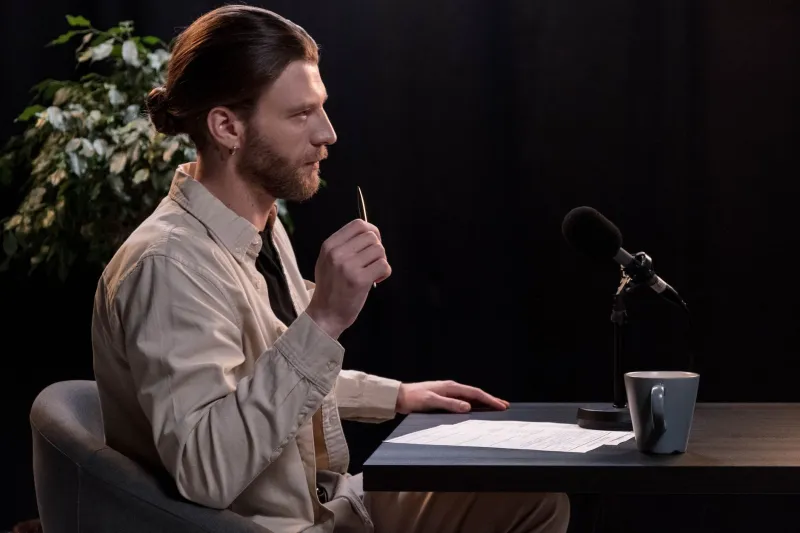
What started as a handful of informal kitchen-table conversations has grown into something that feels, to the people involved, like an act of quiet resistance. Neighbors are showing up with voice recorders and video cameras to sit with elders — grandmothers who remember when certain blocks looked completely different, old-timers who can tell you which corner store let families run tabs during hard months, veterans of neighborhood organizing drives whose names never appeared in any newspaper.
The goal isn't to produce a documentary or publish a book, though some of that may come. The goal is simply to catch the words before they're lost.
"Official history has a way of flattening people," says one longtime Hyde Park resident who has been involved in the archiving effort. "You get names on a plaque, maybe a paragraph in some local records. But you don't get the texture. You don't get what it actually felt like to live here, to struggle here, to love this place."
That texture — the specific details of everyday life that don't fit neatly into historical summaries — is exactly what these community-built oral archives are designed to preserve.
What Gets Left Out of the Official Record
Historians and archivists have long acknowledged a painful truth: the further you sit from power, the less likely your story is to survive. Formal archives tend to preserve the records of institutions, governments, and prominent individuals. They're built around documentation — deeds, permits, newspaper coverage, official correspondence.
But most people don't live their lives in ways that generate paper trails. The family that quietly sheltered a neighbor during a crisis. The woman who spent thirty years as the unofficial counselor for half her block. The man who kept a community garden going through three decades of neighborhood change, asking nothing in return. These aren't the kinds of contributions that end up in a city archive.
Oral history projects have been trying to fill that gap for decades, but what's happening in Hyde Park feels different in its community ownership. This isn't a university-led initiative or a grant-funded program with outside researchers parachuting in. The people doing the recording are neighbors. They grew up on these streets, or their parents did. They already know the context. They already understand what questions matter.
The Living Room as Archive
The settings for these interviews couldn't be more different from a formal oral history recording studio. We're talking about actual living rooms, with the television on in the background, grandchildren wandering through, the smell of something on the stove. And that's not incidental — that's the point.
When people are comfortable, when they're in their own space surrounded by their own things, they remember differently. They reach further back. They tell the stories they wouldn't necessarily tell a stranger with a clipboard.
One Hyde Park resident described recording her grandmother over the course of several Sunday afternoons. "She'd been alive for nearly ninety years. She'd seen this neighborhood through so many different versions of itself. But she'd never really been asked to sit down and talk about it — not formally, not in a way where someone was actually listening and saving it."
What came out of those Sunday sessions: memories of neighborhood businesses that no longer exist, accounts of community tensions and resolutions that never made local news, family stories that stretched back generations and connected Hyde Park's present to histories most residents had never heard.
Gathering in the Gaps
Community gatherings have also become a key part of the effort. Informal events — sometimes at local churches, sometimes in parks, sometimes just at someone's house — bring together residents of different ages to share and cross-reference memories. An elder mentions a name; someone younger recognizes it from a family story. A detail someone thought they'd imagined gets confirmed by three other people who were there.
These gatherings do something that individual interviews can't quite replicate: they show how memory is collective. A neighborhood's history isn't stored in any single person. It's distributed across dozens of people, each holding a piece, and when you get them in a room together, the pieces start to connect.
"You'll have someone say, 'I always wondered what happened to that family on the corner,' and then someone else across the room says, 'Oh, that was my cousin — let me tell you,'" one organizer explained. "Those connections are irreplaceable. You can't manufacture that."
The Weight of What Wasn't Written Down
There's an emotional dimension to this work that the people involved talk about openly. Recording someone's story — really sitting with it, asking follow-up questions, treating it as something worth preserving — is an act of recognition. For elders who spent decades feeling invisible to the broader culture, it can be genuinely moving.
But there's also grief in the process. Every interview surfaces names of people who are already gone, stories that can no longer be verified, details that died with someone who passed away last year, or ten years ago, or fifty. The archives being built now are meaningful precisely because they're being built against time.
"Every person we talk to reminds us of ten people we can't talk to anymore," one participant said. "That's hard. But it also makes you more determined to keep going."
Keeping It Alive
The practical question of how to store and share these archives is one the community is still working through. Digital files get backed up in multiple places. Some recordings have been shared with local libraries and historical societies. There are conversations about building a more formal repository, something accessible to researchers and community members alike.
But the organizers are careful not to let the logistics overshadow the human work. The most important thing, they insist, isn't the file format or the storage system. It's the act of listening.
Hyde Park has always been a place where people's lives ran deeper than what showed up in the official record. The neighbors picking up microphones today aren't trying to rewrite history — they're trying to make sure it gets written in the first place, in the voices of the people who actually lived it.
The stories are still here. For now.