Where the Music Never Asked for Your Papers: Hyde Park's Jazz Clubs and the Freedom They Held Inside
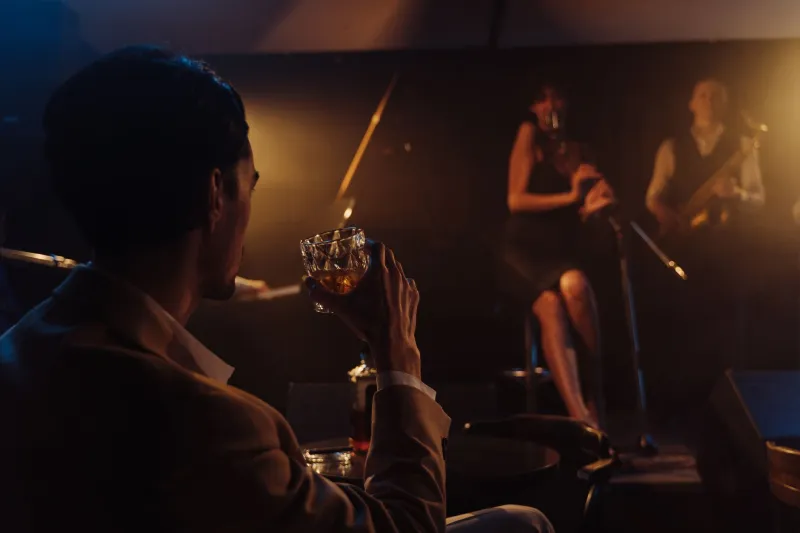
There's a particular kind of quiet that settles over a neighborhood when its music stops. You can feel it in Hyde Park if you know where to stand — on a corner where a marquee used to glow, or in front of a storefront that once shook with bass lines on a Saturday night. The buildings have changed hands. The signs are long gone. But talk to the people who were there, and the sound comes rushing back like it never left.
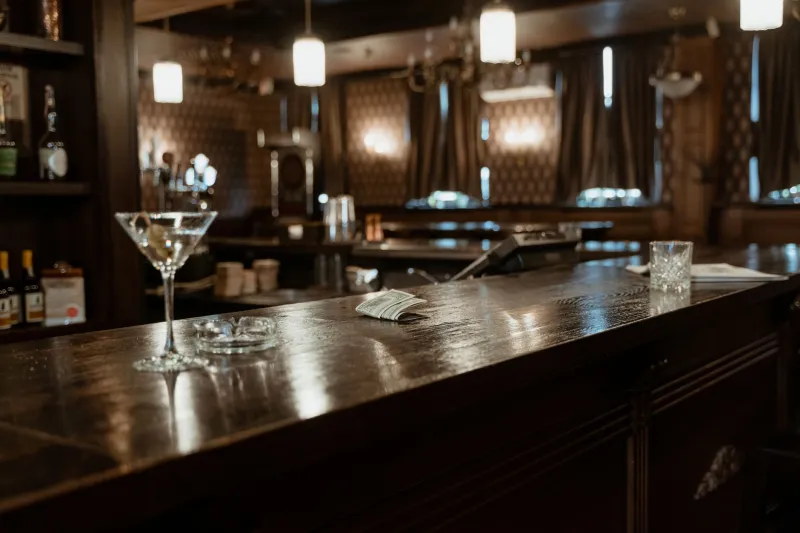
Hyde Park's jazz scene in the mid-20th century wasn't an accident. It was a deliberate act of community-building in a city that, for all its blues and bravado, still made Black residents navigate a maze of unwritten rules about where they could go, sit, perform, and simply be. The clubs that rose along these streets — tucked between bookshops and barbershops, above diners and below street level — became something the city's official culture couldn't offer: a room where nobody questioned your right to be in it.
A Neighborhood That Held Its Ground
Hyde Park in the 1940s and '50s occupied a peculiar position in Chicago's social geography. Anchored by the University of Chicago and bordered by neighborhoods that were themselves in constant demographic flux, it had a reputation for being a little more integrated, a little more intellectually restless than the blocks around it. That reputation wasn't always deserved, and it papered over real tensions. But it did create pockets of genuine openness — and those pockets were where the music lived.
Venues in and around the neighborhood drew musicians who had come north during the Great Migration, artists who had cut their teeth in New Orleans and Memphis and Kansas City and were now reshaping what American music could sound like. Hyde Park's clubs weren't always the biggest rooms in Chicago — the Regal Theater on 47th Street or the venues along the Stroll had more glamour, more capacity. But they had something else: intimacy, and a crowd that showed up to listen.
Longtime residents who remember those years talk about the clubs with the specific warmth people reserve for places that made them feel safe. "You didn't have to explain yourself," one South Sider, now in her eighties, recalled in a community oral history project. "You walked in, you found a seat, and the music just wrapped around you. That was it. That was everything."
The Artists Who Called It Home
For Black musicians navigating mid-century Chicago, the question of where to play was never just about money or exposure. It was about dignity. Downtown venues might book a performer and then refuse to let them use the front entrance. Hotels that hosted touring musicians sometimes wouldn't rent them a room. The applause could be loud and the check could clear, and you could still leave feeling like a guest who'd overstayed a welcome that was never really extended.
Hyde Park's smaller venues operated differently. Club owners — many of them Black entrepreneurs who understood the stakes personally — ran rooms where the performer wasn't a novelty. Musicians could rehearse, argue about chord changes, try out new material, and bomb spectacularly without it becoming a story someone told against them. The bandstand was a workspace as much as a stage.
The names of some of these venues have been absorbed into Chicago music lore. Others exist only in the memories of the people who were there and the occasional photograph tucked into a family album. What they shared was a culture of reciprocity: the audience knew the musicians, the musicians knew the audience, and everyone understood that the room itself was worth protecting.
Several artists who passed through Hyde Park's circuit went on to shape jazz at the national level — musicians whose records you can still find in used bins if you know what to look for. But the clubs also nurtured players who never left the neighborhood, who spent decades performing for the same loyal crowds and teaching the next generation how to hold a melody and mean it.
More Than Entertainment
It would be easy — and a little lazy — to frame these clubs purely as cultural landmarks, as if their value was mainly historical. But the people who frequented them understood something more immediate: these were places where the social rules that governed the rest of the city temporarily suspended themselves.
In an era when segregation shaped everything from where you could buy a house to where you could sit at a lunch counter, a jazz club that welcomed everyone without hierarchy was a radical proposition dressed up in a cover charge and a two-drink minimum. The music created cover for something deeper — a rehearsal, night after night, for a more equitable world.
That's not romanticizing it. That's what the regulars will tell you. The conversations that happened between sets, the introductions made across tables, the arguments about politics and art that spilled out onto the sidewalk at two in the morning — these were the connective tissue of a community that was, in its own way, figuring out how to resist.
What the Silence Tells Us
Most of those clubs are gone now. Urban renewal projects in the late '50s and '60s — programs that displaced thousands of South Side residents under the banner of progress — took out whole blocks of the neighborhood's cultural infrastructure. Some venues closed because their owners aged out or couldn't compete with television and changing tastes. A few hung on longer than anyone expected, sustained by loyalty and stubbornness in roughly equal measure.
What remains is the oral record — the stories passed down by people who danced there, worked there, fell in love there. Hyde Park has always been a neighborhood that takes its own history seriously, and there's an ongoing effort among residents, archivists, and community organizations to document what the official record missed.
Because that's the thing about places that existed outside the mainstream: they didn't always make the papers. The city's music journalists of that era didn't always make it to the South Side. The clubs didn't always have the budget for publicity. So the history lives in people, in the specific and irreplaceable way that the best stories always do.
If you ask the right person — an elder at a church coffee hour, a retired musician at a neighborhood gathering — they'll tell you about a particular night when the room was full and the band was locked in and something happened that felt, just for a few hours, like the world had gotten it right. That's the story Hyde Park keeps telling itself, in the spaces between the notes.