Knock First: The Seven Doorways of One Hyde Park Block and the Stories They Keep
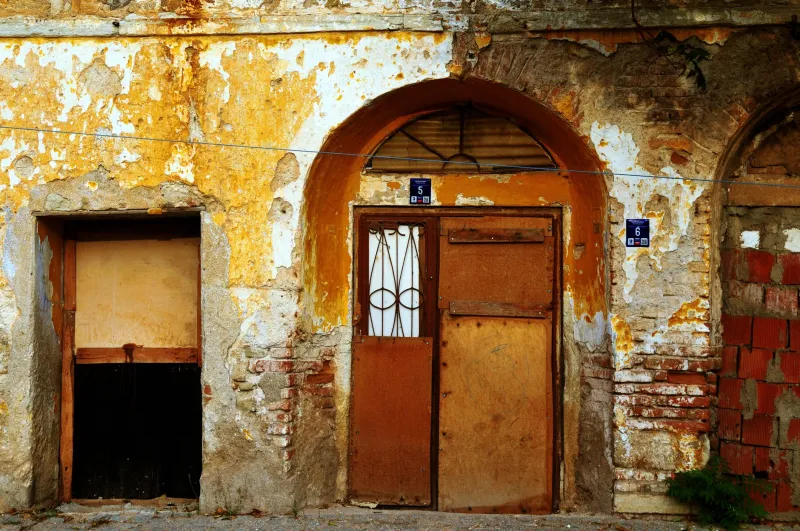
Doors are the most honest architecture in any neighborhood. They tell you who a building expected to see, and — just as often — who it expected to keep out. We spent a month photographing and researching seven doorways on a single block of Hyde Park, talking to the people who first walked through them and the people who still do. What follows is a block's biography, told one threshold at a time.
1. The Church's Side Door
The main entrance faces the street, all stone and ceremony. But the door everybody actually uses is on the side, off the alley — a plain metal door that's been repainted more times than anyone can count. Longtime members explain why: for decades, the front door was where visitors and cameras went, while the side door was where the congregation that actually kept the lights on slipped in before service. "You came through the side if you came to work," one deacon told us, laughing. The door is a small monument to the difference between being welcomed and being useful.
2. The Barbershop
Glass from sidewalk to lintel, always slightly fogged in winter, always open. The barbershop's door has never really closed — regulars describe propping it with a brick during summer cuts going back to the 1960s. It's the block's true town hall. Anyone could walk in; the only requirement was an opinion. Several older residents told us they first heard about jobs, apartments, and even marriages through that doorway before they read about them anywhere else.
3. The Apartment Vestibule
Heavy oak, brass hardware, a buzzer panel with names scratched out and rewritten. Vestibules like this one were Hyde Park's original filter system. In the mid-century years, who got buzzed up — and who got ignored — depended on everything the city wouldn't say out loud. A woman who moved in in 1972 remembers being buzzed in by a stranger on her first day and realizing, only years later, how unusual that kindness was.
4. The Private Club
Technically, it has an address. Practically, it has no sign — just a brass handle and a doorbell people seem to know about without being told. Founded by Black professionals at a time when downtown establishments shut them out, the club's unmarked door was a deliberate choice: the point wasn't secrecy, it was self-sufficiency. "We didn't need the city to know we were here," one longtime member said. "We needed us to know."
5. The Corner Grocery's Rear Entrance
The front door faced 53rd, but the real one faced the alley, where deliveries came in and where neighborhood kids got paid a quarter to haul crates. For immigrant and Black families alike, rear entrances carried a double meaning — sometimes an invitation, sometimes an insult. The grocer's daughter, now in her seventies, remembers her father insisting customers use the front. "He said the alley was for boxes, not for people."
6. The Greystone's Parlor Door
One of the block's grand old homes, carved up into apartments after the war, still keeps its original parlor door — twelve feet of mahogany with a transom above. Tenants describe it as the building's last argument for its former life. Walking through it, one resident said, "you feel like you owe somebody an apology for wearing sneakers."
7. The Newcomer's Steel Door
The newest building on the block went up a decade ago: security glass, keypad entry, a door that announces itself. Some old-timers call it cold. Younger residents call it honest — you need a code, and everyone knows it. Whether that's progress or just a fancier kind of filtering is the argument the block hasn't settled yet.
What the Doors Add Up To
Seven thresholds, seven answers to the question of belonging. Put together, they read like a ledger of everything Hyde Park has decided about access over the last century — who got the front door, who got the side, who got buzzed up and who got left on the step. The doors are still here. They're still counting.